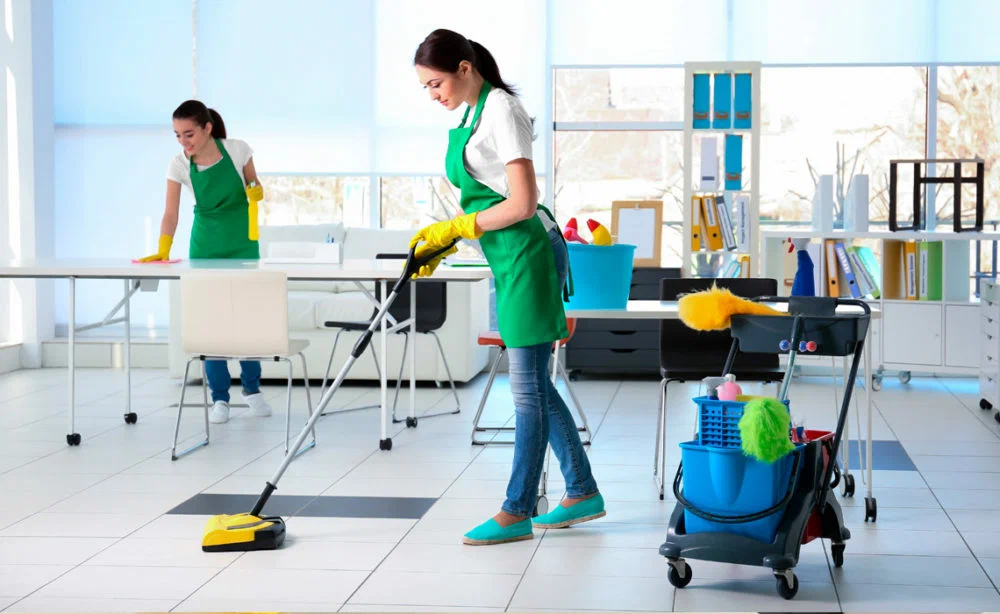
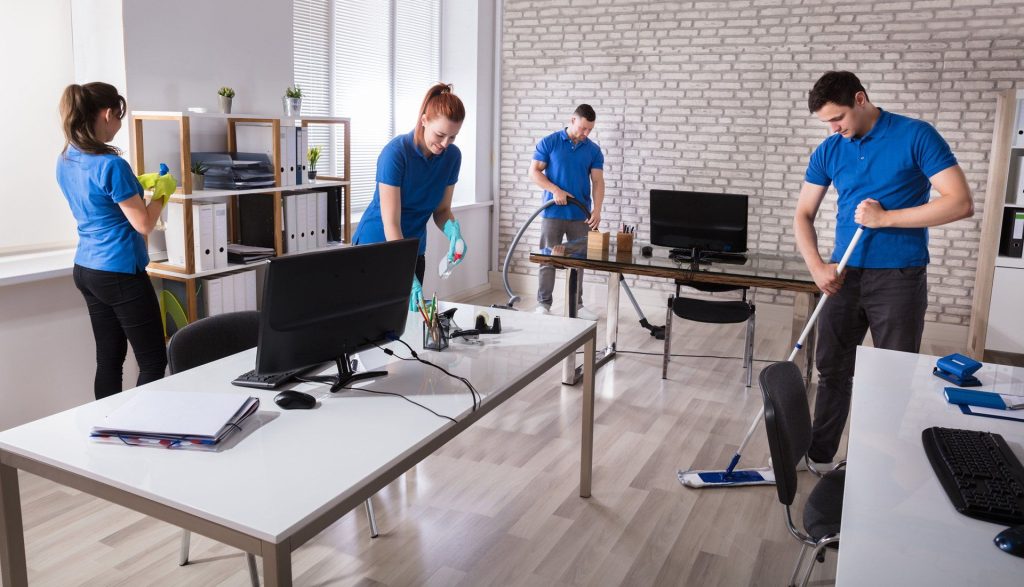
Seasonal cleaning lets businesses address dirt and moisture and helps cleaning teams prioritize different spots each season while performing the same functions every day.
Whether you choose regular office cleaning, biweekly cleaning, or monthly deep cleaning, having a seasonal approach makes your workplace easier to maintain.
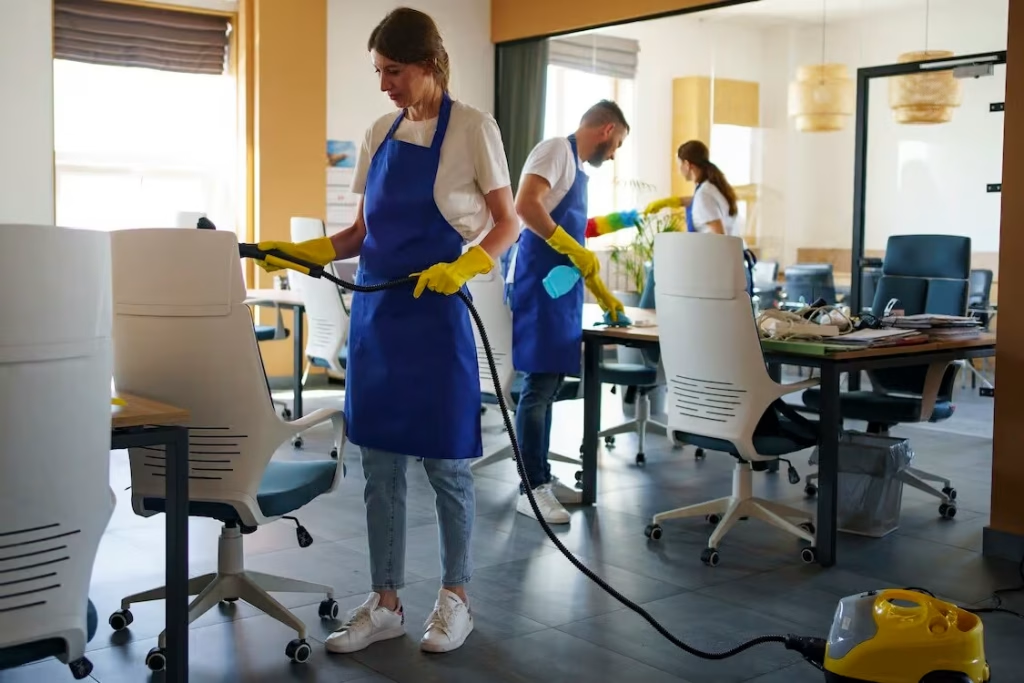
Why is a Seasonal Approach Needed for Commercial Cleaning?
Each season introduces new obstacles and challenges for cleaning. Winter may bring salt, water, grit, and mud that get tracked into the building. Spring may present extra dust and allergens because of open windows and doors. Summer may bring high humidity, while fall may bring even more leaves and debris that get tracked in.
Adopting a seasonal approach to cleaning doesn’t require a complete makeover of the cleaning schedule. It requires an understanding of what is important during each season and what needs more attention during that season.
For example, during the rainy season, floor care for the entries may be required more frequently, while during spring cleaning, attention may be more needed for air vents and high and hard-to-reach surfaces.
This approach is more practical and logical than setting a one-size-fits-all cleaning checklist.
What Should Be Added To Commercial Cleaning in Spring?
Spring is a good time to check beyond the areas of the office that are cleaned most frequently. During the spring, dust can settle in places throughout the office, and newly opened windows can let in pollen and dust.
Focus on Hidden Dust
Dust settles on top of shelves as well as hiding in light fixtures and on top of blinds. Dust collectors behind furniture migrate throughout the office, so including these areas in the spring cleaning schedule will keep the workplace cleaner.
Give Extra Attention to High-Traffic Areas
Floors and entrances become dirty quickly in an actively used workspace because of the daily employee and visitor traffic. Regular vacuuming, mopping, spot cleaning, and daily floor upkeep help maintain these areas.
Consider A Monthly Deep Clean
A monthly deep clean is beneficial when a workspace needs more than routine cleaning. It is to remove build-up that daily and weekly cleaning fails to remove.
How Does Office Cleaning Change With The Arrival Of Summer?
The summer season brings warmer temperatures, higher humidity, and increases in the number of people in common work areas. These factors can have a negative impact on odor, floors, restrooms, and work break areas.
Importance of Regular Office Cleaning
Regular office cleaning is essential for areas where people eat, gather, and spend long periods of time, such as common work areas. Restrooms, door handles, frequently used work surfaces, and common work areas all need to be included in the regular commercial cleaning routine.
Effect of Humidity and The Importance of Immediate Clean Up
Humidity is also a major contributor to odor formation as well as deterioration of work surfaces. Moisture, regardless of the surface, will create a bad odor and remain a major workplace health hazard.
Because workplaces tend to be emptier and less active during summer, it’s a good time to focus on deeper cleaning of storage and conference rooms, as well as flooring and interior glass surfaces.
What Makes Fall a Challenge to Clean?
Fall is a combination of outdoor dust, debris, leaves, and moisture, along with increased indoor activity. Employees leaving and entering the building track in outside debris and dirt.
Focusing on the entrances of the building by cleaning and vacuuming entrance mats regularly will help.
Floor cleaning also becomes crucial. Gritty surfaces begin to show grit almost immediately, and debris is trapped in carpets. A constant cleaning schedule will help remove debris before it builds up and becomes embedded in the floor.
A good time to implement this cleaning schedule is right before the business experiences a surge in the number of employees. It will cause the least amount of disruption.
How Should Your Cleaning Routine Change Due to Winter?
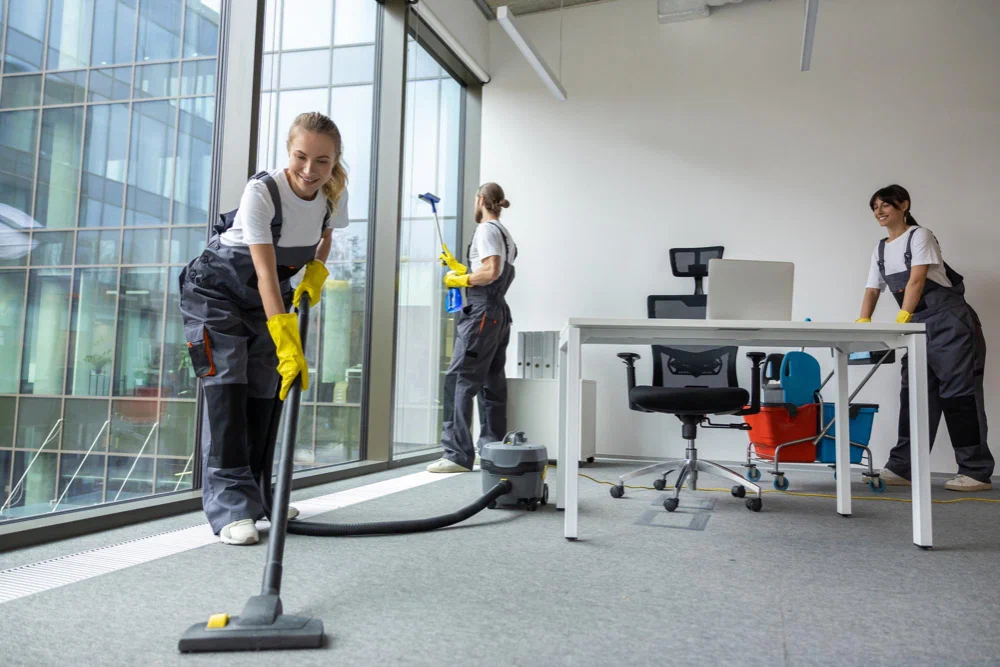
Winter is even more challenging than Fall, as outdoor moisture is paired with mud, snow, and salt and ice melt. Entrances and connecting hallways are the most challenged areas of the building.
How to Clean Floors From Winter Messes
Salts and grit begin to scratch building materials and leave messy residue. Beginning Weekly vacuuming and sweeping, along with damp mopping of hard floors, becomes necessary.
Keep Restrooms and Break Rooms Consistent
Cold weather prompts employees to spend more time away from their workstations. Shared facilities will inevitably be used more frequently. A consistent cleaning schedule for restrooms, kitchens, and break rooms fosters better employee morale.
Watch for Moisture
Coats, shoes, and umbrellas will track water into common areas. Flooring retains water and can cause a slip-and-fall hazard, so cleaning should be done as soon as possible to avoid this hazard.
When Should You Consider Move-In and Move-Out Cleaners?
There are many other reasons to adapt your cleaning practices other than the changing of the seasons. Moving presents a good opportunity to utilize relocation cleaning.
Prior to employees and the business moving in, move-in cleaning professionals thoroughly clean areas that are typically more easily cleaned before they are used. Floors, cabinets, fixtures, and surfaces are some examples of areas needing cleaning.
Move-out cleaners come into a business after it has closed and prepare the business for its next use. This type of cleaning removes dust, dirt, and old residue and provides a better condition than when the previous use left it in.
Distinguishing these types of cleaning from general cleaning is the difference between giving the space a fresh start and simply cleaning to keep it maintained.
Create a Better Commercial Cleaning Schedule
The correct cleaning schedule for a business is based on the type of activity that occurs within that building, as well as the occupancy and traffic levels.
For daily use areas such as high-touch surfaces, bathrooms, kitchens, and busy reception areas, daily cleaning, or cleaning most days of the week, is likely necessary. Standard office cleaning services are able to handle most routine cleaning but may require commercial cleaning visits once every 2 weeks for offices that have moderate levels of traffic.
Bell Cleans Twin Cities
Bell Cleans Twin Cities has decades of experience providing services so clients can focus on their businesses and meet their unique cleaning needs. We understand the importance and complexity of routine and deep cleaning.
Bell Cleans has a proven track record of providing quality services for businesses by identifying key high-traffic areas and building customized cleaning solutions around the client’s needs. This includes regular, ongoing services such as office cleaning and maintenance, move-in/move-out cleaning, and deep cleaning services.
Adjustable Commercial Cleaning Solutions for Dynamic Work Environments
Just as a workplace can change throughout the year, its commercial cleaning solutions should also adapt. Seasonal changes help businesses prepare for the growth of moisture, dust, and tracked-in particles, allergens, and changes in traffic patterns before they become large concerns and secondary maintenance issues.
The best combination of consistent commercial cleaning solutions with seasonal tasks is likely to be the most practical. Daily cleaning of offices helps reduce the buildup of common messes. Biweekly and monthly cleanings can provide additional coverage as needed. In addition, move-in and move-out cleaning services can support businesses through transitions. Call Bell Cleans Twin Cities for reliable commercial cleaning services today.
Questions We Have Answered
- Is seasonal cleaning different from regular office cleaning?
Seasonal commercial cleaning is done in addition to regular cleaning. Seasonal cleaning is done when changes in weather and the condition of the building begin to worsen or cause problems.
- How often should a commercial space be cleaned?
There is no specific answer, as business and building conditions are different. It is measured based on the occupancy of the building, the activities done in a building, the building’s condition, and, of course, how frequently people pass through the building.
- Is monthly deep cleaning necessary if we already clean regularly?
It is definitely beneficial because there is still some level of buildup inside a building’s air ducts and surfaces from normal routine cleaning.
- When should a business schedule move-in cleaning?
Move-in cleaning is best done before the occupants and furniture move in. A completely vacant building is easier and less time-consuming to clean.
- Can the cleaning schedule change during the year?
Yes, especially if there are fluctuations in building occupancy levels or during peak seasons.